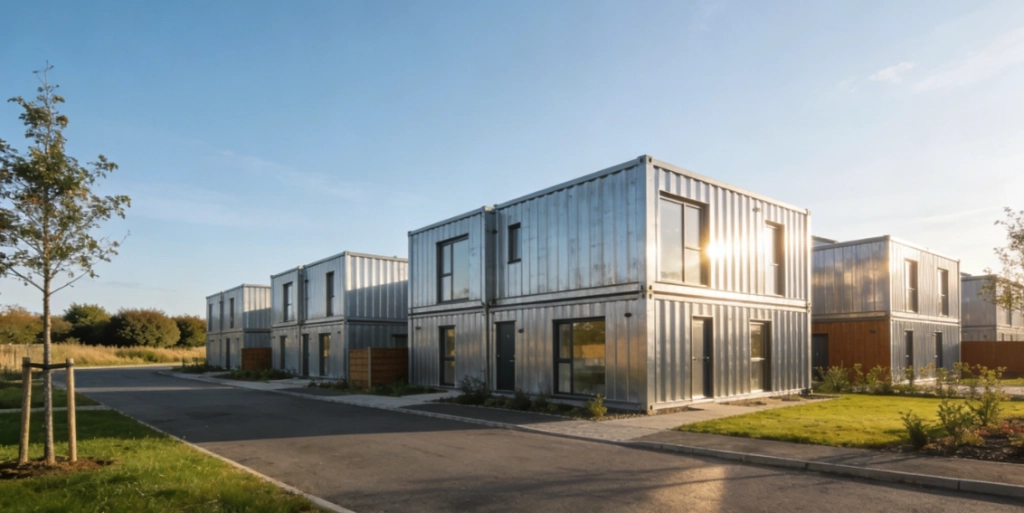
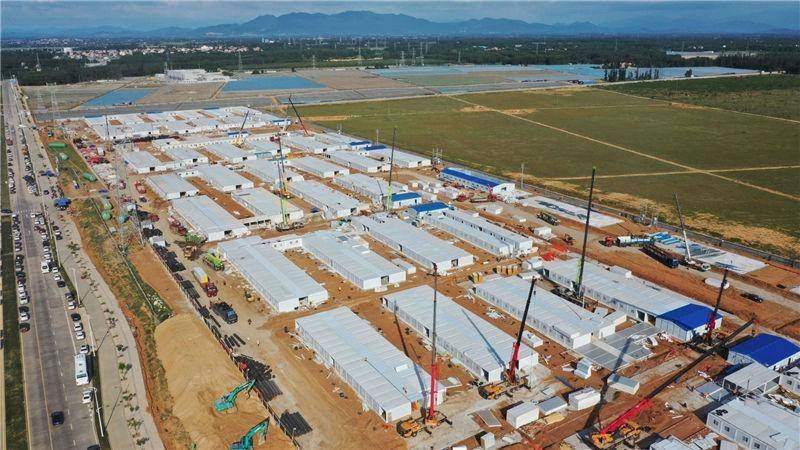
Current defence activities proceed at a brisk pace. Camps no longer stand as fixed setups erected over extended periods. Instead, they function as short-term, portable arrangements often positioned in spots where standard building approaches seem impractical. Whether for forward operating bases or urgent response teams, army setups these days must align with the task at hand, rather than hinder its progress.
This change highlights precisely the area where modular buildings. As a container house manufacturer, GS Housing supplies factory-produced flat pack container house buildings for defence and government projects, supporting rapid deployment, repeated relocation, and long-term operational use. Particularly flat pack container housing setups, deliver tangible benefits. Crafted for swift rollout, ongoing shifts in position, and tough conditions, these modular defence structures now serve as a sensible option compared to typical army building practices.
GS Housing collaborates directly with defence and public sector builders across the globe, offering plant-made modular options that combine quick setup, solid build, and sustained practicality.
What Problems Do Modular Buildings Solve in Modern Defence Operations?
Prior to examining the mechanics of modular buildings, it proves useful to recognize the hurdles defence groups encounter in real settings. Contemporary army infrastructure avoids being fixed in place, and usual building methods fail to match this pace.
Defence efforts nowadays frequently encompass brief assignments, varying sites, and uncertain schedules. Consequently, modular buildings shape themselves to fit these practical demands.
Temporary Bases
Short-term camps require readiness in a short time, at times just a few days. Standard building demands prolonged groundwork, expert workers, and dependable supply lines, elements seldom present in lively defence areas. In practice, defence temporary camps often face limited local labor, restricted heavy equipment access, and compressed delivery schedules, making conventional construction impractical.
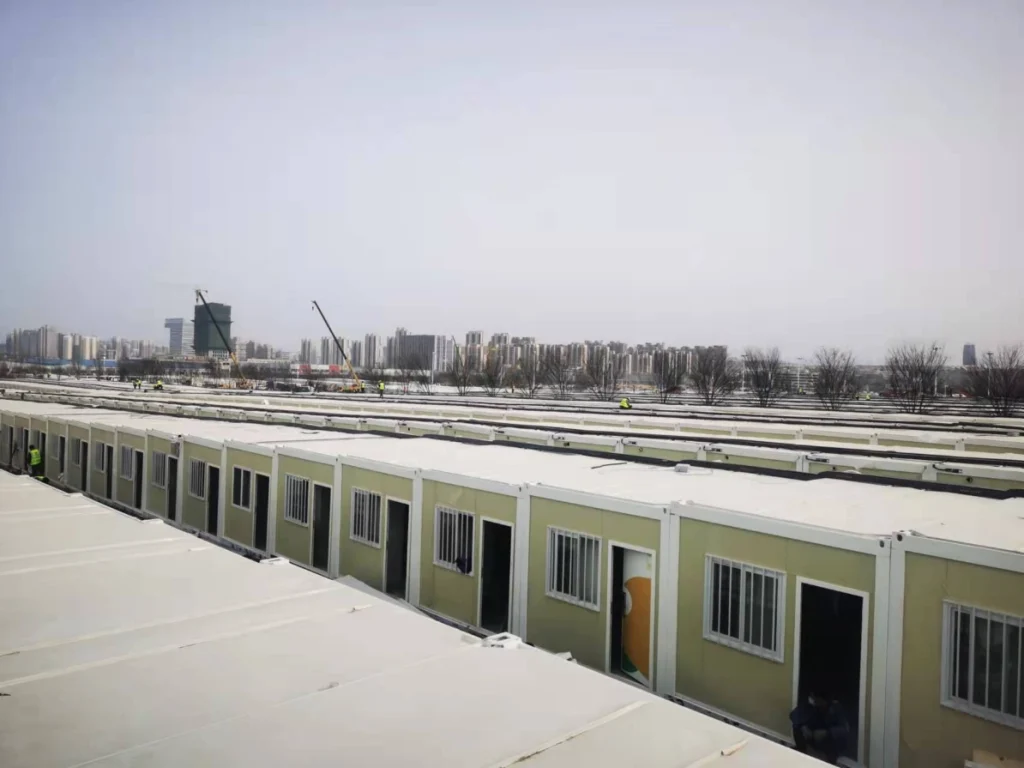
Flat pack modular buildings show up as full packages. After arrival, teams can put them together right there with basic gear, enabling soldiers to settle in promptly without enduring months for lasting constructions.
Forward Operating Bases (FOBs)
FOBs typically sit in isolated or dangerous zones. Under these conditions, minimizing on-site manpower, equipment exposure, and logistics footprint becomes a critical requirement. Big machines, lifting devices, and sizable building groups heighten risks to safety and supply efforts.
Modular container buildings cut down on that presence. Their light sections and screw-together joining allow compact crews to finish the work sans lifting gear, thus maintaining low-profile and effective rollouts.
Emergency Deployment
Crisis aid, peace-keeping tasks, and abrupt army actions call for structures that roll out nearly right away.
Thanks to uniform parts and prepped factory modules, GS Housing’s flat pack arrangements enable defence squads to store, haul, and place buildings swiftly whenever urgency strikes. Standardized flat pack components allow defence units to pre-stock buildings and deploy them without project-specific redesign.
Remote & Border Locations
Isolated dry areas, elevated terrains, and edge regions pose challenging setups for building work. Travel paths remain scarce, and conditions can turn severe.
Modular buildings prepare for extended hauls and multiple applications, rendering them apt for places where starting fresh would prove unfeasible.
Definition of Modular Buildings in the Military & Defence Context
In defence settings, modular buildings exceed basic container covers. They represent planned frameworks constructed to fulfill army benchmarks for toughness, portability, and adjustment.
To grasp their worth, it benefits to outline what marks a genuine defence-level modular building.
l Standardized Container Dimensions for Global Transport
Flat pack container houses adhere to uniform shipping measures, permitting movement via ocean, tracks, or vehicles absent unique care.
Such fitting eases worldwide supply handling and lets defence bodies shift setups over territories via current transport webs. Flat pack container houses are typically designed around 20ft-equivalent modular footprints, allowing transportation by standard container shipping, trucks, or rail.
Rapid Installation by Small Teams (No Crane Required)
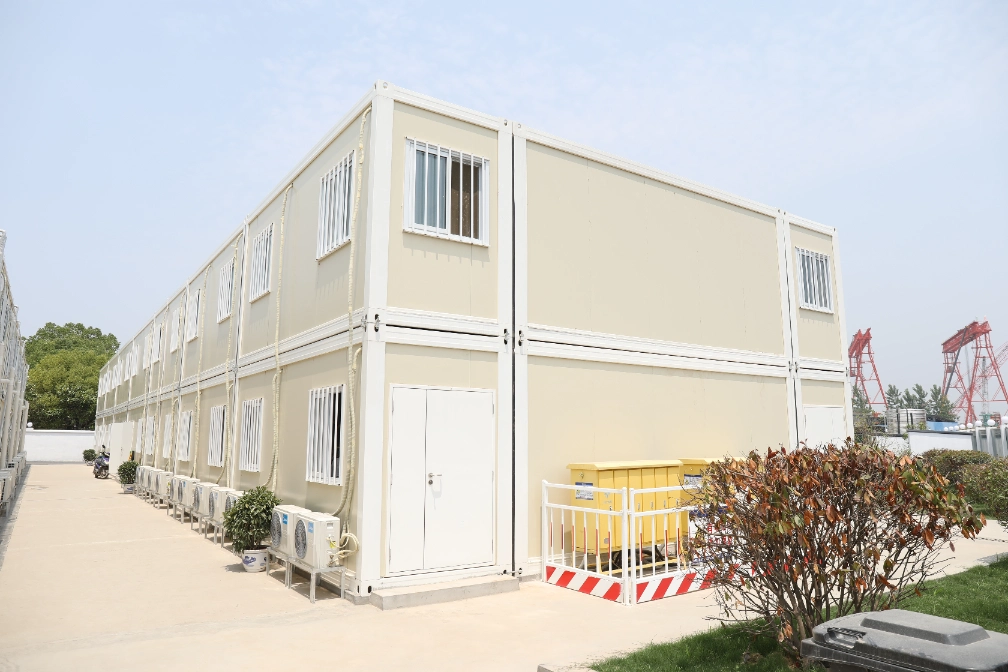
In contrast to pre-made concrete or metal frameworks, flat pack arrangements plan for hand or simple-tool joining.
Sections, supports, and roof elements come pre-planned for quick linking, so skilled groups can join units smoothly, even amid limited spaces.
Structural Strength for Repeated Deployment
Defence structures seldom serve a single purpose. Rather, they break apart, move, and rejoin on numerous occasions.
GS Housing modular parts employ strengthened metal supports and sturdy side systems, the steel frame structure is designed to support repeated assembly and dismantling cycles, making it suitable for long-term defence reuse.
Climate-Adapted Insulation Options
Defence work spans from intense warmth to sub-zero levels, covering every weather type.
Modular buildings equip with heat-barrier kits tailored to particular settings, boosting inside ease and cutting power needs for warmth or chill control. Insulation thickness, wall panels, and roofing systems can be configured based on specific climate and operational requirements.
Comparison with Traditional Defence Infrastructure
Modular buildings do more than speed up old-style structures. In numerous defence cases, they surpass standard building altogether.
Construction Time
Usual army buildings frequently require months to wrap up, despite using pre-fab pieces.
Flat pack modular buildings deploy and join in mere days, sharply reducing the span from outline to use. This helps defence projects significantly shorten site readiness timelines and reduce operational delays.
Mobility & Relocation
Lasting buildings act as set holdings. After erection, shifting them proves impossible. Modular units, however, prepare for breakdown and repositioning, so defence crews can repurpose the identical setups for diverse tasks.
Cost Efficiency
On-ground building brings steep worker fees, supply loss, and erratic outlays.
Plant output lets GS Housing manage standards and expenses from the start, giving defence purchasers steadier planning and reduced ongoing costs. This improves cost predictability and planning reliability for defence procurement teams.
Reusability
Standard buildings often get left behind or torn down post-task. Modular buildings, by contrast, serve as reusable holdings, aiding several rollouts over time and greatly enhancing value return.
Maintenance Requirements
Fixes in the field for usual frameworks can drag on and cost plenty. Modular buildings rely on uniform components, simplifying upkeep and swaps, particularly in far-flung spots.
How Do Flat Pack Container Houses Improve Mobility in Defence Operations?
Portability ranks among the chief gains modular buildings offer to defence efforts. Setups no longer tie a group to a single site. Flat pack systems craft with relocation central from the outset.
Lightweight and Easy Transportability
Flat pack styles shrink haul space by fitting parts neatly into boxes.
This trims moving expenses and permits greater numbers of units in one load, a key factor in broad rollouts.
Rapid On-Site Assembly Without Heavy Equipment
In various defence surroundings, lifting cranes and weighty devices either miss or pose dangers for use.
GS Housing modular setups join via hand implements and minor lift aids, hastening placement all while preserving task bend.
Reconfigurable Layouts for Dynamic Mission Needs
Tasks evolve, and room demands follow suit. Modular buildings rearrange, grow, or reshuffle by linking units, letting defence groups tweak plans for stays, oversight, or aid roles as situations shift.
GS Housing Modular Building Solutions for Defence Applications
As a modular building manufacturer, GS Housing supports defence projects with factory-direct supply, customized building layouts, and technical coordination throughout production and deployment.
GS Housing provides various modular building forms aimed squarely at defence needs. Every option stresses prompt rollout, endurance, and useful adaptability.
Quick Setup Barracks and Accommodation Units
Troop quarters must ensure safety, comfort, and speedy placement. GS Housing flat pack barracks deliver heat-sealed living areas with choices for power setups, airflow, and cleanliness, bolstering soldier well-being in passing sites.
Field Command Centers and Communication Hubs
Oversight and management spots demand protected, steady surroundings for gear and staff.
Modular units shape into oversight hubs featuring bolstered builds, wire path options, and weather handling suited to delicate work.
Support Facilities: Medical, Storage, and Sanitation
Defence work relies on aid infrastructure much like front-line ones. GS Housing modular systems often apply to on-site health setups, hold depots, and hygiene areas, all geared for quick rise and dependable output.
Looking for Rapid-Deployment Modular Buildings for Defence?
Today’s defence setups call for pace, portability, and dependability. Flat pack container housing arrangements furnish a workable response to such issues, free from the holdups and bounds of standard building.
GS Housing furnishes maker-direct modular building options crafted for defence and army uses globally.
Contact GS Housing to discuss your defence project requirements, including building specifications, deployment timelines, and customized modular building solutions.
FAQ
Q1: Are flat pack modular buildings suitable for long-term defence use?
A: Yes. Although designed for rapid deployment, GS Housing modular buildings are built with reinforced steel structures and durable materials, making them suitable for both temporary and semi-permanent defence installations.
Q2: Can modular defence buildings be relocated multiple times?
A: Flat pack container buildings are specifically engineered for repeated assembly and dismantling. With proper handling, they can be relocated and reused across multiple missions without major structural loss.
Q3: How do modular buildings perform in extreme climates?
A: GS Housing offers climate-adapted insulation and material options for hot, cold, and high-humidity environments, allowing modular units to perform reliably in diverse defence locations.